
Core Mechanics
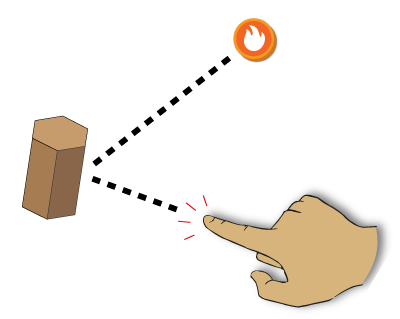
At its heart, the Dexterity Game System revolves around flicking wooden discs of various sizes to resolve actions. Players position their finger behind a disc and flick it across the play surface. Success is determined by where the disc lands and what it contacts during its movement.
This physical interaction creates several unique gameplay elements:
- Skill-Based Resolution - Player accuracy and technique directly influence outcomes, making practice and skill development rewarding
- Tactical Positioning - Disc placement before and after flicking creates strategic depth
- Risk-Reward Decisions - Players must choose between safe, conservative shots and risky, high-reward manoeuvres
- Physical Interaction - The tactile nature of flicking discs provides immediate, satisfying feedback
Game Elements
Wooden Discs
Games in the Dexterity Game System use wooden discs in multiple sizes, typically ranging from extra small to extra large. Different disc sizes serve different purposes - larger discs represent sturdy characters or obstacles, while smaller discs might represent projectiles or agile units. The size and weight of each disc affects how it moves when flicked.
Play Surfaces
Most Dexterity Game System titles use neoprene playmats that provide consistent friction and durability. These premium surfaces ensure reliable disc movement and protect both the discs and playing area. Some games include multiple double-sided playmats for variety.
Wall Systems
Elzra's modular wall systems create contained play areas, preventing discs from flying off the table during enthusiastic play. Walls also enable bank shots and ricochets, adding tactical options.
Templates and Tokens
Various templates and tokens expand gameplay possibilities. Area-of-effect templates measure blast radiuses. Target tokens mark specific locations. These components integrate physical measurements with the dexterity mechanics.
Shot Types
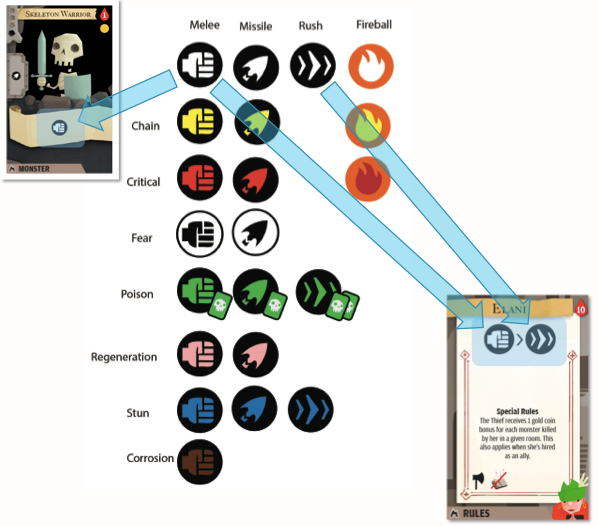
The Dexterity Game System includes numerous shot types that create varied gameplay:
- Direct Shots - Flick a disc to hit a target directly
- Ranged Shots - Flick a projectile disc from a character disc toward enemies
- Chain Shots - Hit multiple targets in sequence with a single flick
- Area Shots - Use templates to affect all discs within a defined area
- Bank Shots - Ricochet off walls to hit targets around corners
- Shield Shots - Reflect enemy attacks back at attackers
Applications
While the Dexterity Game System was first developed for the fantasy dungeon crawler Catacombs, it has proven adaptable to multiple settings and game types:
- Catacombs Series - Fantasy dungeon crawling with heroes battling monsters
- Catacombs & Castles Series - Castle siege warfare with armies and fortifications
- Catacombs Conquest - Fast card-driven dexterity combat
- Catacombs Cubes - Puzzle-based dexterity challenges
Design Philosophy
The Dexterity Game System was designed with several core principles:
Accessibility - The basic mechanic of flicking a disc is intuitive. New players can begin playing immediately, though mastering advanced techniques requires practice.
Fairness - Unlike pure randomness, the dexterity system rewards player skill while still allowing for unexpected outcomes. Positioning, angles, and timing create strategic depth.
Engagement - All players remain engaged throughout the game. Even when it's not their turn, players watch shots unfold with interest, and dramatic moments emerge naturally from gameplay.
Physicality - In an increasingly digital world, the tactile nature of flicking wooden discs provides a satisfying, physical game experience that stands apart from screen-based entertainment.
Evolution and Innovation
Since its introduction in 2010, the Dexterity Game System has continuously evolved. Each new release introduces refinements and expansions to the core mechanics:
- Area-of-effect templates for multi-target attacks
- Mounting systems for riding creatures
- Card-based ability activation
- Terrain effects and obstacles
- Asymmetric player powers
- Exploration and progression systems
Awards and Recognition
Games built on the Dexterity Game System have received numerous industry awards and accolades:
- BoardGameGeek Most Innovative Game (2010)
- Dice Tower Best Innovative Game (2010)
- Dice Tower Seal of Excellence (multiple titles)
- GeekDad Game of the Year (2011)
- Shut Up & Sit Down "Reference Pear" Award
- IGA Gold Award
The system's success demonstrates that dexterity mechanics can create deep, engaging gameplay experiences that appeal to both casual and experienced board game players.